


Table of Contents
ToggleHow Much Does It Cost to Install Quartz Countertops?
Quartz countertops are a top choice for homeowners in Denver who want style, durability, and low maintenance. But how much should you expect to pay for a quartz countertop installation?
Here’s a complete breakdown of quartz countertop installation costs, including materials, labor, and key factors that can affect the total price of your project.
Average Cost of Quartz Countertops
In 2025, the average cost to install quartz countertops ranges from:
$60 to $120 per square foot (installed)
Total project cost: $2,000 – $4,500 for a standard kitchen (30–40 sq. ft.)
This price includes the quartz slab, fabrication, edge profiles, and professional installation.
Cost Breakdown
1. Material Cost
Low-end quartz: $50–$70/sq. ft.
Mid-range quartz: $70–$90/sq. ft.
High-end/premium quartz: $90–$150+/sq. ft.
Prices vary depending on the brand, pattern, thickness, and whether the slab is in-stock or custom ordered.
2. Installation Labor
Labor typically adds $20–$30 per square foot, which includes:
Templating and measurements
Fabrication and cutting
Edge profiling and polishing
Delivery and installation
3. Additional Costs
Cutouts (sink, cooktop, faucet): $100–$400+ each
Edge upgrades (e.g., ogee, mitered): $10–$25/linear foot
Backsplash (optional): $15–$30/sq. ft.
Removal of old countertops: $100–$300
Seaming and corner work: May incur additional charges depending on layout
Factors That Affect Quartz Installation Cost
Brand & Style: Premium brands like Cambria or Caesarstone tend to cost more.
Slab Thickness: Standard is 3cm; thinner options are less expensive but may need support.
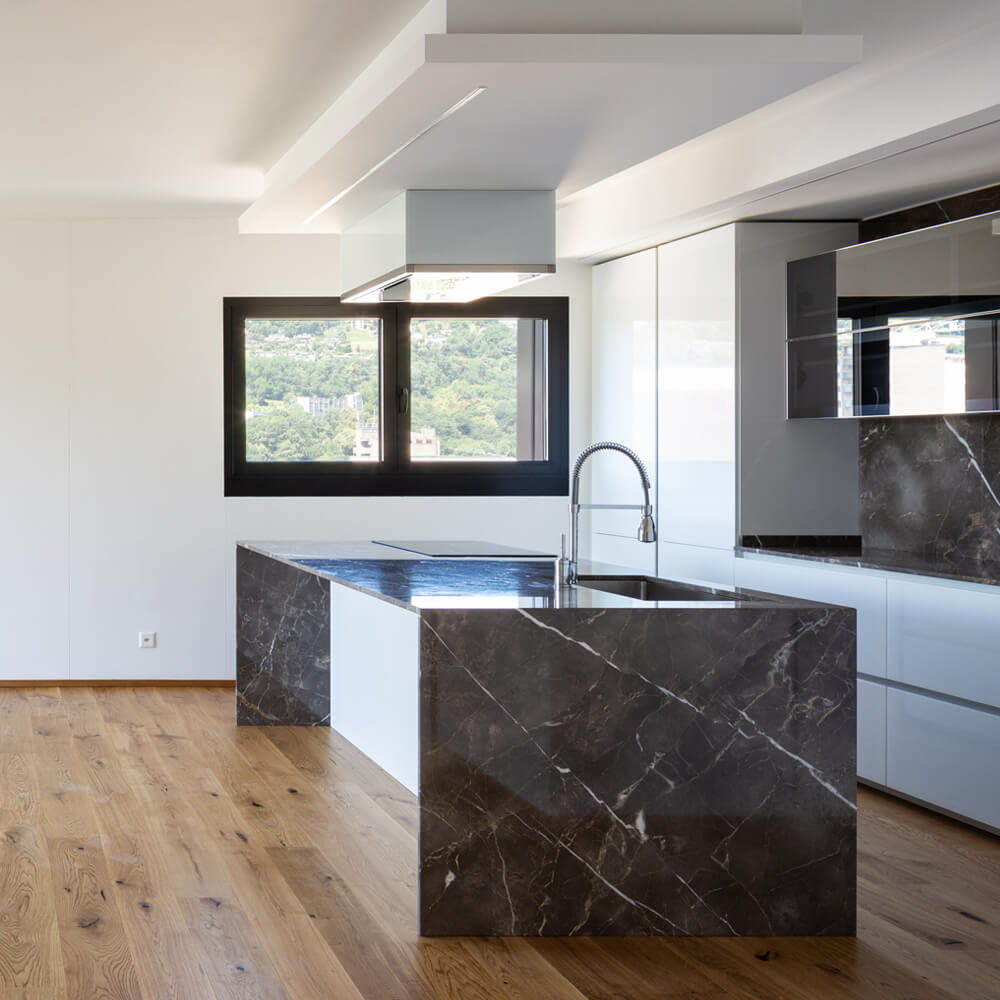
Design Complexity: Waterfall edges, L-shaped counters, and integrated sinks can increase cost.
Geographic Location: Labor rates vary by region—expect slightly higher prices in urban areas.
Is Quartz Worth the Investment?
Yes—quartz countertops offer a strong return on investment thanks to their:
Long lifespan
Low maintenance (no sealing required)
Non-porous, stain- and bacteria-resistant surface
Wide variety of design options
They’re especially popular with homeowners who want the look of marble without the upkeep.
Quartz Countertop Installation in Denver
Looking for expert quartz countertop installation in Denver? Our team offers premium quartz surfaces, custom fabrication, and professional installation—all at competitive prices.
Contact us for a free estimate and explore in-stock styles at our showroom.


What Goes Into Installation Labor (and Why It Costs What It Does)
When you see “labor” as part of a quartz countertop quote (often ranging from $20–$30 per sq ft), that cost includes many detailed steps. Labor isn’t just “putting the slab in place” — it’s every bit of work, from planning to finishing. Here’s what your installation team typically does:
1. Templating & Measurement
Visit your home or project site to take precise measurements and assess layout challenges (walls, corners, overhangs, supports, obstacles).
Create a digital or physical template that guides cutting and ensures the countertops will fit exactly.
2. Cutting, Fabrication & Finishing
Cut the quartz slab to match the template, including mitered edges or decorative profiles.
Polish edges, bevels, and ensure smooth transitions between pieces.
Cut out holes for sinks, faucets, cooktops, and any inlays or fixtures.
Dry-fit the pieces to confirm alignment before final installation.
3. Transportation & Handling
Load the fabricated slabs carefully, transport them to your home/site, and handle them with care (quartz is heavy, fragile).
Use suction lifts, protective padding, and sometimes special rigging for multi-story homes or tight access.
4. Alignment, Leveling & Securing
Ensure cabinets or substrate are perfectly level. Any uneven base must be shimmed or corrected before mounting.
Carefully place each slab piece, adjust for seams, and verify fit.
Use adhesives or mechanical fasteners as required to secure the quartz to the base.
5. Seaming & Joint Work
Where more than one piece is needed, seams must be joined precisely. Aesthetically pleasing seams use high-quality epoxy and alignment techniques.
Remove excess epoxy, polish the seam, and color-match to make it as invisible as possible.
6. Flashing, Backsplash Tie-ins & Caulking
If there is a backsplash, edge, wall tie-in, or overhang, you must ensure proper caulking/sealant to prevent water infiltration.
Sometimes minor drywall or backsplash adjustments are needed at the wall-joint interface.
7. Cleanup & Final Inspection
Remove debris from the installation area, clean the surface, and inspect for issues—chips, gaps, or misalignments.
Touch up any necessary spots (seal joints, caulk, polish edges) before considering the job complete.
Why Labor Varies Across Projects
Complex layouts (wraparounds, islands, islands with sinks) require more cutting, seams, and finishing.
High-end edge profiles (waterfall, ogee, mitered edges) take more time and precision.
Difficult access or tight spaces slow down transport and placement.
Thick slabs or harder quartz formulas increase cutting time and wear on tools.
Existing counter removal or substrate repair may add unanticipated labor costs if underlying structure or damage is found.


