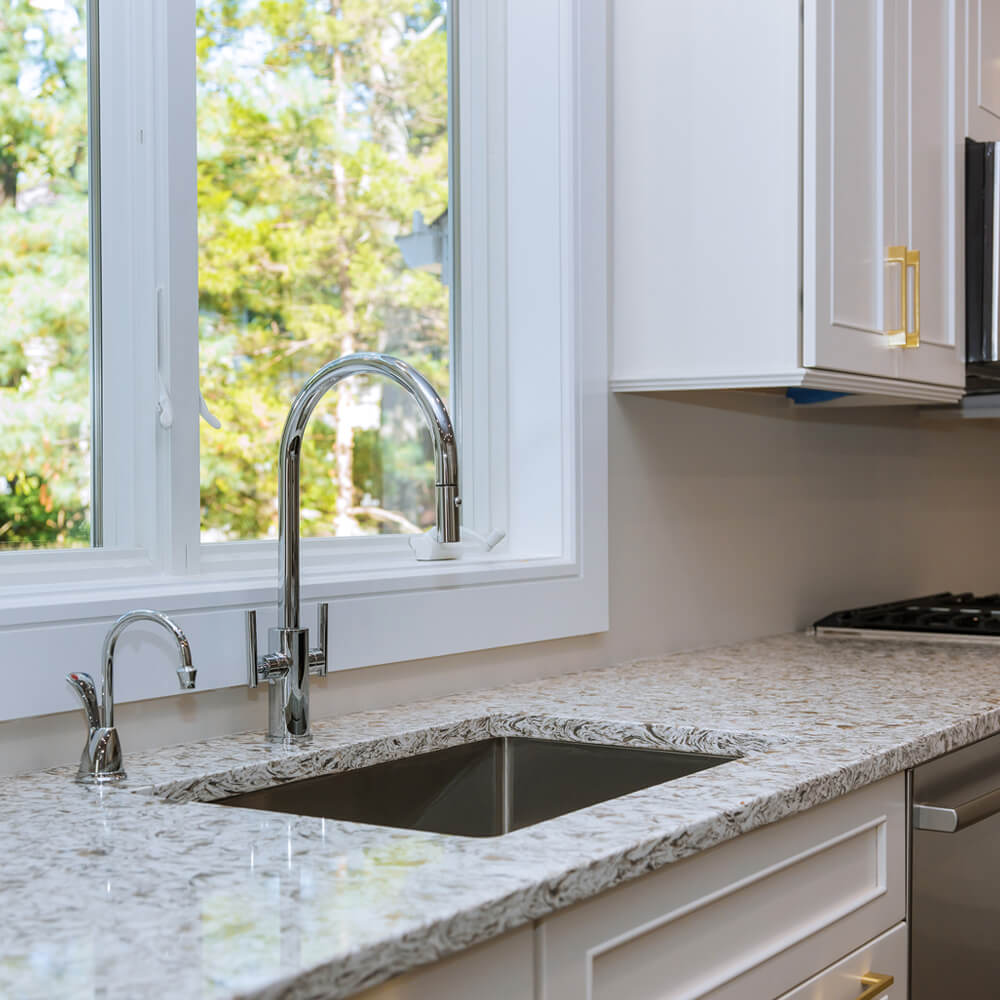
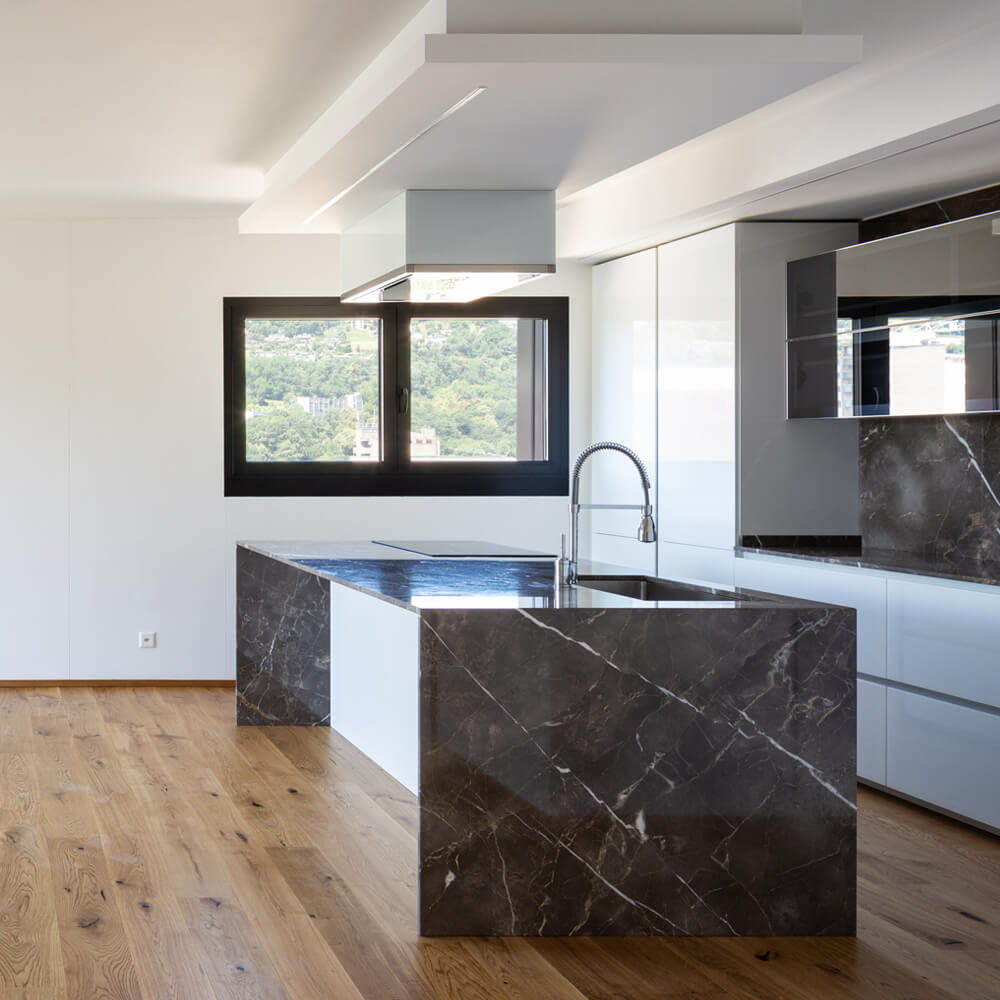
Choosing the right countertop material is one of the most important decisions you’ll make during a kitchen or bathroom renovation. Two of the most popular options — graniteand quartz— each offer unique benefits in terms of durability, maintenance, and design. In this guide, we’ll compare granite vs. quartz countertops to help you make the best choice for your home.
What Are Granite and Quartz Countertops?
Granite is a natural stone that is quarried, cut into slabs, and polished. Each slab is unique, with natural veining, color variation, and patterning.
Quartz countertops are engineered stone, made from about 90–95% ground quartz and 5–10% resins, polymers, and pigments. This gives quartz a more uniform appearance and added durability.
Appearance
Granite offers a one-of-a-kind look, ideal if you want something organic and unique. No two slabs are the same.
Quartz provides more consistent color and pattern, which is great for contemporary and modern aesthetics. It’s also available in styles that mimic marble or concrete.
Choose granite for natural beauty. Choose quartz for uniform design and color flexibility.
Durability
Granite is a very hard natural stone, but because it’s porous, it can stain or harbor bacteria if not properly sealed.
Quartz is non-porous, making it more resistant to staining, cracking, and bacterial growth.
Quartz is the winner for low-maintenance durability.
Maintenance
Granite requires annual sealing to maintain its resistance to stains and moisture.
Quartz is maintenance-free — no sealing needed. Just clean with mild soap and water.
Quartz is easier to care for on a daily basis.
Heat and Scratch Resistance
Granite is more heat-resistant than quartz. You can place hot pots directly on its surface (though trivets are still recommended).
Quartz can be damaged by high heat and may discolor over time if exposed to extreme temperatures.
Granite is better for those who frequently cook with high heat.
Cost Comparison
Granite countertops typically cost $40–$100 per square foot installed, depending on rarity and origin.
Quartz countertops range from $50–$120 per square foot installed.
💡 Prices vary based on fabrication, edge profiles, and installation. Visit our showroom for exact quotes.
Environmental Impact
Granite must be quarried and transported, which contributes to a larger carbon footprint.
Quartz is engineered, and some brands use recycled materials or eco-friendly practices.
Quartz may be the more sustainable option, depending on the brand.
Which One Is Right for You?
Feature
Granite
Quartz
Natural Look
✅ Yes
❌ Uniform only
Durability
✅ High (but porous)
✅ Higher (non-porous)
Maintenance
❌ Needs sealing
✅ Maintenance-free
Heat Resistance
✅ Excellent
❌ Less heat-tolerant
Stain Resistance
❌ Needs sealing
✅ Very stain-resistant
Cost
✅ Usually less expensive
❌ Slightly more expensive
Final Thoughts
Both granite and quartz are excellent choices for countertops, and the best option depends on your lifestyle, design preferences, and budget. If you value natural beauty and heat resistance, granite might be your top choice. If you want a sleek, low-maintenance surface that’s highly resistant to stains and bacteria, quartzis the way to go.
Ready to Choose?
At The Countertop Factory LLC we offer a wide selection of high-quality granite and quartz countertops for homeowners in Denver. Visit our showroom or contact us today to get a free quote and design consultation.